09 October 2008

Latitude Zero review by Denis Minev

Latitude Zero: Tales of the Equator
by Gianni Guadalupi
Edition: Hardcover
Availability: In Stock

 
4.0 out of 5 stars NICE TIDBITS OF HISTORY IN THE TROPICSJuly 23, 2006
The tropics have always fascinated European explorers with tales of monsters and incredible nature. In this book, the authors tell the stories of a few handpicked explorers of the tropics. 

The stories are divided among continents: 
1. In South America, we have Orellana (first man down the Amazon), Aguirre (insane explorer in the Amazon), Raleigh (Brit up in Guyana) and Condamine (the French measurer of the Earth). 
2. In Africa, Livingstone, Burton, Speke, Conrad, among others. 
3. In Asia, Magellan (first around the world), Stevenson (of literary fame), and Brooke (the white Raja). 

These are just short stories, of maybe 5-15 pages per explorer, and the choice of explorers is not necessarily the best, given the limited space in the book.

Lizzie review by Denis Minev

Lizzie: A Victorian Lady's Amazon Adventure
by Tony Morrison
Edition: Hardcover
Availability: Out of Print--Limited Availability

 
5.0 out of 5 stars COMMENTED DIARIES OF AN BRITISH LADY IN THE AMAZONJuly 23, 2006
Lizzie Hessel was a British lady who, at a young age right after her marriage, followed her husband to the depths of the Amazon for him to take the job of rubber tapping manager at Orton, a famous rubber zone in northern Bolivia. 

This book is basically a collection of letter Lizzie sent her family in England throughout her journey (which took over a year just to get to Orton). In it, she witnessed death (of Fitzcarraldo no less, the man immortalized by Herzog's movie), faced hunger and difficult living conditions with humidity, insects and no shelter in the jungle. The owner of Orton also dies on the way, which makes their situation uncertain halfway through the trip. 

The authors added commentary to the letters, which provide the reader context to her situation. Maps also give the reader a good sense of where the couple is and where they are headed. It also shows how crazy their trip is, going around the interior of the continent to avoid a yellow fever outbreak. Overall, an outstanding story, with an ending that I will not give away, but is heartstopping.

Deforestation and Land Use in the Amazon review by Denis Minev

Deforestation and Land Use in the Amazon
by CHARLES H. WOOD
Edition: Hardcover
Availability: In Stock

 
4.0 out of 5 stars GOOD COLLECTION OF SCHOLARLY ARTICLES ON DEFORESTATION IN THE AMAZONJuly 23, 2006
The authors have put together a good collection of articles on deforestation and land use in the Amazon. Having come to the subject with only limited knowledge, after reading most of the articles a reader is able to speak knowledgeably on the subject. 

Articles focus on very distinct topics such as: 
1) Migration patterns and the way they have affected land use and deforestation 
2) The choice of migrants to go to cities or urban areas 
3) The pattern of deforestation along major roads 
4) The demographic profiles of colonists and the effect they have on land use choice 

An interesting characteristic is that land use choices were very different among settlers, even in similar areas. Oftertimes these were based on demographics (age and composition of families), wealth levels, and knowledge base. Also interesting were the description of efforts of participative land use planning and the potential benefits of bringing stakeholders in making good and lasting land use decisions. 

The articles in this book were compiled from academic publications, so were not geared towards the general public. Of the 14 articles assembled, perhaps 3 or 4 are difficult to read. All are academic, bringing in many references to previous work. If one is willing to tear through academic articles on the subject, there is much very interesting knowledge to be gained.

The End of Poverty review by Denis Minev

The End of Poverty: Economic Possibilities for Our Time
by Jeffrey D. Sachs
Edition: Hardcover
Availability: Out of Print--Limited Availability


1 of 2 people found the following review helpful:
4.0 out of 5 stars A GREAT ECONOMIST GOES ON THE FIELD TO UNDERSTAND POVERTYJuly 23, 2006
Jeffrey Sachs has for long been a celebrated economist, a leader in the field of development economics. In this book, he focuses on global poverty and tries to draw conclusions from the world's experiences in teh 20th century. 

The book is divided into three parts: (1) country analyses, (2) on-the-ground microeconomic problem identification and solutions and (3) ways to scale up the identified solutions on a global scale. 

The country sections focus on individual countries, trying to disect a bit of economic and political history to explain why some countries have succeeded instead of others -- the countries analyzed include China, India, Bolivia, Russia, and Poland. In brief chapters, Sachs gives the reader a good understanding of recent history and perspectives of each country. 

The microeconomic solution sections are the most interesting I believe. Sachs is on the ground trying to identify why hard working people do not get out of poverty. A few areas are emphasizes, such as agricultural productivity through fertilizers, basic health investments such as bed nets to prevent malaria, education, infrastructure such as roads, communication and power, and safe drinking water. 

Last is the section of scaling up such solutions across the poor world. This section is not as interesting as the previous two and fails to recognize the usual agency problem in which donor's money may not reach the poor due to lack of proper incentives along the way. 

The End of Poverty is a nice book, a good effort to address certain issues that economists often underestimate. The usual policy prescription of economics are shown to fall far short of realities and necessities on the ground. Growth cannot be sparked by macroeconomic stability, but by a combination of factor which include stability. The other factors are what Jeff Sachs tries to address, quite successfully in this volume.

Unknown Amazon review by Denis Minev

Unknown Amazon
by Colin McEwan; Christiana Barreto; Eduardo Neves
Edition: Paperback
Availability: In Stock


2 of 3 people found the following review helpful:
5.0 out of 5 stars COLLECTION OF SECRETS HIDDEN DEEP WITHIN THE AMAZONJuly 23, 2006
The Amazon rain forest reamins today one of the more mysterious places in world. There are as of yet unknown tribes, the history of the region is only now being uncovered, and the complex nature of its ecosystem is as gradiouse as it is mysterious. 

This book is a collection of articles by different specialists in different fields of study. They are not written as academic articles, but rather as articles accessible to laypeople. The topics include: 
1. The Terra Preta do Indio, a surprisingly fertile soil that appears to have been designed by ancient indians. 
2. The pattern of hunter gatherer movements and how they have constructed their environment so enhance tree species appropriate to their living. 
3. Rock art of ancient Amazonians, along different rivers, much of which is undeciphered. 
4. The history of war clubs in Guyana, among others. 

The book is peppered with pictures that enhance the mysterious nature of the articles and place to the reader questions only now being answered by researchers. I highly recommend it as a book to find out how the Amazon is not yet understood and the vast amount of knowledge yet to be gained by studying it.

The Lost Amazon review by Denis Minev

The Lost Amazon: The Photographic Journey of Richard Evans Schultes
by Wade Davis
Edition: Hardcover
Availability: Out of Print--Limited Availability


13 of 13 people found the following review helpful:
5.0 out of 5 stars PHOTOGRAPHIC JOURNEY OF RICHARD EVANS SCHULTESAugust 5, 2006
Schultes was perhaps the greatest ethnobotanists of all time and definitely the father of the subject. In this book, his pupil (and today famed explorer) Wade Davis puts together a sampling of his photographs throughout his life in the Amazon, providing a visual context to the story about the great scientist and explorer. 

Schultes lived among indians for many years in the northwestern Amazon, in search for knowledge about its plants and their secrets. He uncovered many hallucinogenic plants in the process, which earned him a cult status in the 1970s. During his time with the indians, he was able to build strong relationships with the natives, which earned a position of respect and gave him the ability to explore their land and knowledge deeply. 

Schultes is one of the last great explorers who disconnected himself from the outside world for years in order to collect new specimens and search for more knowledge. Such figures are rare, if at existent in the modern world. He wrote many books about his travels, which would also make interesting reading, especially as they relat ehte knowledge he gathered. This is more of a coffee table type of book, with many pictures and less story. Having read one of his books, I appreciated seeing the pictures of his time in the Amazon.

The Last Great Adventure of Sir Peter Blake review by Denis Minev

The Last Great Adventure of Sir Peter Blake: With Seamaster and blakexpeditions from Antarctica to the Amazon : Sir Peter Blake's Logbooks
by Peter
Edition: Hardcover
Availability: In Stock

 
4.0 out of 5 stars LOGBOOKS OF A GREAT ADVENTURER IN HIS LAST ADVENTUREAugust 5, 2006
Sir Peter Blake was a great adventurer and seaman. He was part of the team that won the America's Cup in 1995 and lead the defense of the title in 2000 for New Zealand, where he is a national hero. 

This book is a celebration of his long and successful career sailing the world. In this last expedition, he goes from Antarctica to the Amazon, going all the way up the Casiquiare, teh legendary canal discovered by Alexander von Humboldt that connects the Negro with the Orinoco rivers. Throughout the books provides a glimpse of local history, with a special emphasis on environmental issues, which were very much on Blake's agenda in this voyage. His journals show a very deep concern for the future of both Antarctica and the Amazon, as tremendously different but similarly delicate regions. 

The book is in hard cover format and has lots of pictures taken throughout the trip, which provide the reader with a visula context of the logbook. It is a sad story because it ends up in Peter's demise, attacked by pirates at the mouth of the Amazon, yet it stands as a tribute to a great sportsman and environmental leader.

Trespassers on the Amazon review by Denis Minev

Trespassers on the Amazon
by John Ure
Edition: Hardcover
Availability: Out of Print--Limited Availability


1 of 1 people found the following review helpful:
4.0 out of 5 stars SUMMARY OF BRITISH EXPLORATIONS IN THE AMAZONAugust 5, 2006
The author was British ambassador to Brazil for many years and has been a member of the famed Royal Geographic Society, sponsor of many an exploration in the Amazon and elsewhere around the world. 

This book is aimed at describing the more famous British explorers in the Amazon and uncovering some of the lesser known ones. 

Explorers whose exploits are mentioned, with varying degrees of detail, include Raleigh (first to go up the Orinoco), Roe (who established a British trading post in the Amazon in the 1600s, Wallace, Bates (great anturalists), Spruce, Wickham (naturalists and takers of riches, cichona the first and rubber the second), Casement (important human rights figure who ended up hung for treason), and many other lesser known characters, such as Waughn, Fleming, and Lizzie (the first woman explorer to write her story). 

The book is short (roughly 250 pages) and provides the reader a good glimpse of British involvement in the Amazon over the last 4 centuries. It is focused mainly on British characters, so some important outsiders are left out, such as Humboldt and La Condamine, but overall it is a good intro to the subject.

White Waters and Black review by Denis Minev

White Waters and Black
by Gordon MacCreagh
Edition: Paperback
Availability: In Stock

 
1 of 1 people found the following review helpful:
5.0 out of 5 stars GREAT BOOK ABOUT AN UNREMARKABLE EXPEDITIONAugust 5, 2006
Mr MacCreagh has maganed to write an outstanding book based on a rather unsuccessful expedition. It is the tale of an expedition of eight eminent scientist in the Amazon, who were put together not for their ability in the outdoors, but for their scientific knowledge. 

The author is a helper/manager of the expedition. He manages to describe the expedition from its beginning in the Bolivia highlands out to the Amazon plains and to its disintegration. It is quite clear that the scientist were not sure what to expect, and so had not prepared accordingly. Huge volumes of luggage went unused and were a huge burden. Egos and discomfort made the scientist into bickering children and inept explorers. The author masks their names because apparently these were well known figures of their time. 

There is a bit of scientific content in the book, but clearly the main reason to read it is for the good humor of the author in describing the situations they get themselves in. One learns more about people and how they behave when taken to extremes than one does about the Amazon.

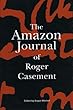
The Amazon Journal of Roger Casement review by Denis Minev

The Amazon Journal of Roger Casement
by Angus Mitchell
Edition: Paperback
Availability: Out of Print--Limited Availability

 
4.0 out of 5 stars DIARY OF CASEMENT'S HUMAN RIGHTS FACT FINDING MISSION IN THE AMAZONAugust 5, 2006
Roger Casement, while consul in Rio de Janeiro for Britain, was asked to investigate human rights abuses by a British based company in the Putumayo river region of Peru. Casement was already by then a celebrated figure, having investigated human right abuse claims in the Congo under king Leopold of Belgium. Ultimately he would meet his fate at the hands of the British government, as an Irish revolutionary in WWI. He remains a famous and controversial figure in history. 

While in the Amazon, Roger Casement wrote a detailed diaryof everything he saw, even before approaching the regio in question. He had a very inquisitive mind, as is clear by his descriptions of the people and places he saw. In the Putumayo region, he tirelessly interviewed a large number of people, which did indeed reveal a pattern of maltreatment beyond imagination. Indian rubbertappers were often killed or maimed for not reaching quotas, they were often whipped and imprisoned for the most minor offenses. There were attempts to hide the truth by locals, but he was quite insistent in his questioning, enough to outdo any attempts against his finding out the truth. 

As a result, the Peruvian Amazon Company, as the COmpany was known, was prosecuted in England, along with its diretors, some of which were major figures in high society England at the time, as well as the infamous Julio Cesar Arana, the leader and mastermind of the company, who at the time was living in Manaus. 

The book is very long and at times boring, as the author did not aim it at a leisure audience, but as an investigation. There are most certainly better descriptions of the Putumayo case, such as by Hardenburg, the first person to uncover to the outside world such abuses. If you are doing in depth research on this case, then the dairy is a must. Otherwise, stick to a better storyteller than this one.

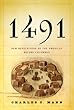
1491 review by Denis Minev

1491: New Revelations of the Americas Before Columbus
by Charles C. Mann
Edition: Hardcover
Availability: In Stock


10 of 12 people found the following review helpful:
5.0 out of 5 stars WELL WRITTEN SUMMARY OF RECENT SCHOLARSHIP ON OCCUPATION OF THE AMERICAS BEFORE COLUMBUSSeptember 3, 2006
There has been much scholarly discussion over the years about pre-Columbian societies in the Americas. How many were there? What technologies did they develop? Did they have writing? What destroyed them? Where is the evidence? 

In this book, Charles Mann brought together much of the recent scholarly knowledge, piecing together evidence from across North, Central and South America, to come up with a cohesive image of what the Americas looked like in terms of human occupation before Columbus. 

The book's main arguemnt is that the Americas were already heavily populated with as many as 20 million people when Columbus arrived. These people possessed technology very advanced that was not, as much of history tells, puny and weak compared to what Europeans had developed. Agricultural methods were advanced and very productive, providing the basis for the establishment of large sedentary populations, much larger than previously thought. These large populations were mainly destroyed by disease. What we see today are in fact the remaining population after the equivalent of a holocaust, which is hardly a good basis to judge their capabilities and one time glory. 

To demonstrate this theory, evidence is gathered from archeology and ancient reports from travellers. From most 16th century explorers, we get a picture of a heavily populated landscape, both in the southeastern US and in the Amazon. However, explorers through the same regions roughtly a century later describe a landscape of peaceful nature without large human interventions. The archeological evidence, as more is discovered, points in the direction of large populations and many characteristics (such as religion and art) of sedentary populations. 

Particularly interesting is the section on the Amazon forest, in which the author describes the Amazon not as virginal forest but rather an a human construct, a large garden manipulated by ancient inhabitants, now abandoned. Evidence of these people's technology can be found in unlikely places, such as in the formation of terra preta, a highly fertile soil in a land well known for poor soils for agriculture. Additionally, the raised fields of the Bolivian Amazon also point to a highly sophisticated and organized society that would need to be surplus producing in order to spare the manpower for such great public works. 

An interesting addendum to his argument is about the freedom enjoyed by antive americans, which is much more similar to the freedom we enjoy today and seek to expand, than the Europeans at the time enjoyed. The author does a superb job of piecing together evidence from across the continent to come to interesting conclusions about our ancestors. 

I highly recommend this book not only to anyone interested in the history of the Americas before Columbus, but to anyone looking for an interesting read about our history as humans.

Amazon Insects review by Denis Minev

Amazon Insects - A Photo Guide
by James L. Castner
Edition: Paperback
Availability: In Stock

 
1 of 1 people found the following review helpful:
4.0 out of 5 stars GOOD PHOTO GUIDE, SHORT AND SWEET DESCRIPTIONSSeptember 7, 2006
This book is a very short photo guide book of insects in the Amazon. In 160 short pages (each page is about 1/2 of a regular page's size), the author covers some of the most picturesque species of insects one is likely to find in the Amazon. 

In a recent trip I brought the guide along to see if I could distinguish some of the species I encountered. Though I found many insects similar to the ones in the book, I noticed that the book did not describe the most common ones, such as regular flies and mosquitos. These are the most abundant and bothersome kinds, but are out of the book probably because they are not very interesting. 

Overall, this is an interesting guide and the pictures are definitely amazing. Would benefit from the addition of the more boring insects.

Stringing Together a Nation review by Denis Minev

Stringing Together a Nation: Cândido Mariano da Silva Rondon and the Construction of a Modern Brazil, 1906-1930
by Todd A. Diacon
Edition: Paperback
Availability: In Stock

 
6 of 7 people found the following review helpful:
5.0 out of 5 stars PART HISTORY, PART ACADEMIC ARGUMENT, WELL WRITTEN ABOUT A GREAT MANSeptember 7, 2006
Though in modern Brazil the name Rondon is very well known, even with a state (Rondonia) named after him, few people know the reason for his fame and the particulars that drove him to be Brazil's greatest native explorer. 

Rondon's name is attached to the telegraph service and indian protection. In this book, the author explores the history of the telegraph commission led by Rondon, from its humble beginnings after the Paraguay war to the great nation building plan to occupy the Amazon. It describes the successes and the organization that was put together to build the telegraph and then moved on to occupation of lands after the end of telegraph building. 

There is a special chapter on the Rondon and Roosevelt expedition which uncovered the route of the Rio da Dúvida, later renamed Rio Roosevelt. In it the conflicts between the Americans (Roosevelt, his son and a few scientists) and the Brazilians are clear, as Rondon seeks to map correctly the route as they are running out fo food and getting dangerously sick. 

An important section of the book is also devoted to Rondon's positivism and an explanation of the routes and beliefs of positivists in Brazil. Rondon was influenced during his military training and kept the beliefs of positivism as a religion to the end of his life. It guided much of his relationships with indians, seeking to bring them into an enlightened society and avoiding their contact with the church, which would be a strong nemesis of his throughout his life. 

I highly recommend this book to anyone interested in the life of Rondon or the history of nation building in Brazil. You will come out with a good understanding of the roots of the Brazilian republic and perhaps the reasons why Brazil has not faced as many internal fissures as most of its neighbors.

A Land of Ghosts review by Denis Minev

A Land of Ghosts: The Braided Lives of People and the Forest in Far Western Amazonia
by David G. Campbell
Edition: Hardcover
Availability: In Stock


5 of 5 people found the following review helpful:
5.0 out of 5 stars AMAZING TRAVEL AND SCIENCE WRITING ON THE AMAZONSeptember 7, 2006
Though there are many books that describe nature in the Amazon, David Campbell definitely is among the top writers on it. In this book he offers, from start to finish, a very interesting mix between storytelling with lyrical qualities and scientific analysis with social commentary. 

He is a scientist, focused on botany, and his knowledge of all aspects of science related to the forest are outstanding. We learn about the strategies employed by frogs to reproduce, or by snakes to identify prey, or by trees to attach polen to beetles. While learning about the science behind such activities and how they evolved, the author leads the reader through his travel log, meeting people and species and learning much about the history of the region he is visiting. 

Besides all the interesting science, the author also provides a very deep character description of the people who live in this remote frontier. The stories range from rubber tappers left over from a period of abundance, to old indians who became westernized, to occupants moving there from the south due to government incentives. Each has a story and a way to deal with the challenges of the forest; some have a way to prosper in the exact same circumstances in which others fail. Some characters are presented as integrated in the forest, some as aliens beaten by the forest, some as leaders beating the forest. 

Most amazing than all the history, social aspects and science however are the narrative abilities of the author. The book is a work of art, as it becomes clear that every word has been hand picked and every metaphor was chosen to provide the reader with the correct image, texture, taste, sound and smell of the forest. Reading is an experience of immersion and is to be savoured as very few books provide such a deep experience. It becomes quite clear to anyone reading the book that the author has a deep connection with his subject, much beyond science. 

This book is the very best description of the Amazon I have encountered, written with gusto. It is the kind of book you will wish you had written. I highly recommend it to anyone interested in the region, in nature writing or in popular science.

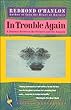
In Trouble Again review by Denis Minev

In Trouble Again: A Journey Between Orinoco and the Amazon
by Redmond O'Hanlon
Edition: Paperback
Availability: In Stock

 
4 of 4 people found the following review helpful:
3.0 out of 5 stars WELL WRITTEN AND FUNNY, OVER THE TOP AT TIMESSeptember 7, 2006
Redmond O'Hanlon is a good travel writer, bringing the reader into his canoe as he faces a torrent of dangers and unpleasant situations. His British humour is very well placed in presenting some of the absurb situations he gets himself into. Especially with Simon as his sidekick (which gives the reader a somewhat normal view of things), the story is quite captivating. 

However, some of his descriptions and stories did leave me with the feeling that he may have augmented the danger of situations to make the story more interesting. He also blew up the stupidity of some characters, giving in to what sounds like basic stereotypes of indians and the fears white people have of indians. 

Overall, this is a decent book. If you are into Amazon travel, this is a nice adition. However, if you just want an intro to the Amazon through the eyes of an adventurer, there are better books, such as David Campbell's (1st person, more scientific pop writing with lyrical qualities) or Candice Millard's (old travel, relating Roosevelt's exploration in the Amazon).

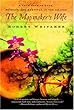
The Mapmaker's Wife review by Denis Minev

The Mapmaker's Wife: A True Tale of Love, Murder, and Survival in the Amazon
by Robert Whitaker
Edition: Paperback
Availability: In Stock

 
10 of 10 people found the following review helpful:
5.0 out of 5 stars TALE OF HISTORY, ADVENTURE, LOVE AND SCIENCESeptember 26, 2006
This book is actually a collection of different topics weaved together with the background of the love story between a lowly French scientist and an upperclass Ecuadorian lady. 

The book starts with a historical science controversy, between Cassini and Newton, regarding the actual shape of the earth. Cassini thought the world was elongated and Newton argued it was fat at the Equator. In order to reach a conclusion, a team is put together to make physical experiments at the Equator to define the shape of the Earth. That is when La Condamine and Louis Godin come in, two top French scientists, who embark on this years long trip. What should have lasted two years takes more than ten. A large group is put together to support the scientist in their journey. 

The author also describes in great detail the society into which they are initially welcomed in Ecuador. However difficulties with clergy and governors arise, culminating in the public lynching of the doctor of the expedition. 

All this occurs before we get to the story of Jean Godin and Isabel Grameson. Jean is the nephew of the scientist Louis Godin and Isabel is the daghter of a rich landowner in Ecuador. They begin their life together in Ecuador during the expedition and then decide to stay on for a while, but when Jean's business enterprises go bankrupt he decides to go back to France with his wife and now large family of four children. He heads through the Amazon, a dangerous journey, in the hopes of figuring out the way and then coming back to get his wife. For a number of reasons, once he is done and safely at the mouth of the Amazon, he does not go back. So, after her four children die of various diseases, Izabel gets tired of waiting and heads on her own journey across the Amazon. And that is when the story happens, which I will not ruin by telling here. 

This book mixed history, science, adventure and love quite well. I highly recommend it to anyone interested in South American history, history of science, love and adventure stories. It is a timeless classic, a story that enthralled people in the 18th century and continues to do so today.

The Last Forest Review by Denis Minev

The Last Forest: The Amazon in the Age of Globalization
by Mark London
Edition: Hardcover
Availability: In Stock


3 of 4 people found the following review helpful:
5.0 out of 5 stars GREAT ANALYSIS OF CURRENT SITUATION IN THE AMAZONApril 5, 2007
Mark London and Brian Kelly come back to the Amazon after having written about it back in the 1980s. They find a very different world, where they find development alongside with poverty and environmental degradation. The book is centered upon understanding the different regions (states) within the Amazon and the differing dynamics within them. The book will not give definitive answers to the region's problems, but rather paint the picture and suggest directions in which we should move. 

A main and important conclusion is the realization that the Amazon is not a pristine jungle without people, but rather that people are an integral part of it, and that any solution needs to take into account the widespread presence of population -- the concept of sustainable development needs to include good living standards for people within the forest. The book also points to some successes in preservation, such as the establishment of the Manaus Free Trade Zone as a means of attracting people away from the interior and providing good living standards. 

The book flows from a history of the Amazon as a portuguese colony, to a Brazilian outpost to the center of the rubber world, to present day. A few key players are highlighted, such as Blairo Maggi (governor of Mato Grosso and the largest soy farmer in the world) and Eduardo Braga (governor of Amazonas and responsible for the reduction of deforestation by 53% in the largest Amazon state). It is also a travel book, highlighting the many different places and realities seen by the authors, from the wealthy shopping malls of Manaus to the poor slums of Altamira. 

Highly recommend this book for anyone wanting to get a good image of the current status of development in the Amazon and hoping to understand the direction in which the region is moving.

The Thief at the End of the World review by Denis Minev

The Thief at the End of the World: Rubber, Power, and the Seeds of Empire
by Joe Jackson
Edition: Hardcover
Availability: In Stock


5.0 out of 5 stars An epic about rubber and its historyAugust 4, 2008
Rubber would not at first seem like such an exciting product. However, the history of it, from La Condamine's first samples brought from the Amazon to France to the momentous steal of seeds by Wickham (main character of the book) to Kew Gardens and later to Malaysia, is a truly outstanding saga of what would today be known as biopiracy but was at the time simply the obligation to serve the British crown. 

The economic collapse left behind by rubber in the Amazon is coupled with the progress brought upon the British colonies in southeast Asia. The book contemplates the history of why rubber (along with coal and steel) became such a valuable material desired and needed for much of the industrial and railroad revolution. The bottleneck was supply of rubber, which came from the tree in not too reachable circumstances in the Amazon. Wickham and the British crown sought to make it more productive and widely available (hence cheaper). 

In the midst of it all is the curious Wickham character - part idealist, part opportunist, who would eventually sacrifice everything (family, love, etc.) chasing dreams across the world from the Amazon to New Guinea. 

I highly recommend this book for anyone who is widely knowledgeable about the Amazon and would like more info on this singular event that changed its history.

The Catfish Connection review by Denis Minev

The Catfish Connection (Biology and Resource Management Series)
by Ronaldo Barthem
Edition: Hardcover
Price: $64.50
Availability: In Stock
17 used & new from $37.12

 
5.0 out of 5 stars HIGHLY ACADEMIC, INTERESTINGAugust 4, 2008
This is an academic book about the accumulated scientific knowledge on the large Amazon catfishes. The book ranges from highly technical notes of how populations are surveyed to a list of all the different species in the region and their characteristics. 

The very interesting fact is the migratory patterns of the different species along different rivers. The general pattern is to reproduce in headwaters, then they travel to the estuary region where they grow and then migrate back to headwaters to feed, grow more (ever larger, 200 pounds or more) and finally reproduce. The study reflects part of the concern over large hydroelectric dams that could interrupt this cycle. 

I recommend this book for anyone interested in the finer aspects of Amazon conservation. Though academic, it is readable for the novice as well.

Insight Guide Amazon Wildlife review

Insight Guide Amazon Wildlife (Insight Guides Amazon Wildlife)
by Hans-Ulrich Bernard
Edition: Paperback
Price: $15.61
Availability: In Stock
25 used & new from $11.65

 
4.0 out of 5 stars COMPILATION RATHER THAN GUIDEAugust 4, 2008
This book is very interesting in the choice of animals it makes and has interesting facts about the Amazon and its species. However, its proposition to be a full guide is too ambitious and cannot be achieved in so short a space. 

Some of the most significant deficiencies relate to the flora, which is only sparsely described. It is not too helpful in identifying species, especially given the abundance of the region. 

I recommend this guide to an amateur who is interesting in identifying a few species, especially of fauna, who is not too particular about identifying specific ones. It is full of interesting facts that a first time visitor would certainly enjoy.