09 October 2008

Trespassers on the Amazon review by Denis Minev

Trespassers on the Amazon
by John Ure
Edition: Hardcover
Availability: Out of Print--Limited Availability


1 of 1 people found the following review helpful:
4.0 out of 5 stars SUMMARY OF BRITISH EXPLORATIONS IN THE AMAZONAugust 5, 2006
The author was British ambassador to Brazil for many years and has been a member of the famed Royal Geographic Society, sponsor of many an exploration in the Amazon and elsewhere around the world. 

This book is aimed at describing the more famous British explorers in the Amazon and uncovering some of the lesser known ones. 

Explorers whose exploits are mentioned, with varying degrees of detail, include Raleigh (first to go up the Orinoco), Roe (who established a British trading post in the Amazon in the 1600s, Wallace, Bates (great anturalists), Spruce, Wickham (naturalists and takers of riches, cichona the first and rubber the second), Casement (important human rights figure who ended up hung for treason), and many other lesser known characters, such as Waughn, Fleming, and Lizzie (the first woman explorer to write her story). 

The book is short (roughly 250 pages) and provides the reader a good glimpse of British involvement in the Amazon over the last 4 centuries. It is focused mainly on British characters, so some important outsiders are left out, such as Humboldt and La Condamine, but overall it is a good intro to the subject.

White Waters and Black review by Denis Minev

White Waters and Black
by Gordon MacCreagh
Edition: Paperback
Availability: In Stock

 
1 of 1 people found the following review helpful:
5.0 out of 5 stars GREAT BOOK ABOUT AN UNREMARKABLE EXPEDITIONAugust 5, 2006
Mr MacCreagh has maganed to write an outstanding book based on a rather unsuccessful expedition. It is the tale of an expedition of eight eminent scientist in the Amazon, who were put together not for their ability in the outdoors, but for their scientific knowledge. 

The author is a helper/manager of the expedition. He manages to describe the expedition from its beginning in the Bolivia highlands out to the Amazon plains and to its disintegration. It is quite clear that the scientist were not sure what to expect, and so had not prepared accordingly. Huge volumes of luggage went unused and were a huge burden. Egos and discomfort made the scientist into bickering children and inept explorers. The author masks their names because apparently these were well known figures of their time. 

There is a bit of scientific content in the book, but clearly the main reason to read it is for the good humor of the author in describing the situations they get themselves in. One learns more about people and how they behave when taken to extremes than one does about the Amazon.

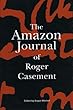
The Amazon Journal of Roger Casement review by Denis Minev

The Amazon Journal of Roger Casement
by Angus Mitchell
Edition: Paperback
Availability: Out of Print--Limited Availability

 
4.0 out of 5 stars DIARY OF CASEMENT'S HUMAN RIGHTS FACT FINDING MISSION IN THE AMAZONAugust 5, 2006
Roger Casement, while consul in Rio de Janeiro for Britain, was asked to investigate human rights abuses by a British based company in the Putumayo river region of Peru. Casement was already by then a celebrated figure, having investigated human right abuse claims in the Congo under king Leopold of Belgium. Ultimately he would meet his fate at the hands of the British government, as an Irish revolutionary in WWI. He remains a famous and controversial figure in history. 

While in the Amazon, Roger Casement wrote a detailed diaryof everything he saw, even before approaching the regio in question. He had a very inquisitive mind, as is clear by his descriptions of the people and places he saw. In the Putumayo region, he tirelessly interviewed a large number of people, which did indeed reveal a pattern of maltreatment beyond imagination. Indian rubbertappers were often killed or maimed for not reaching quotas, they were often whipped and imprisoned for the most minor offenses. There were attempts to hide the truth by locals, but he was quite insistent in his questioning, enough to outdo any attempts against his finding out the truth. 

As a result, the Peruvian Amazon Company, as the COmpany was known, was prosecuted in England, along with its diretors, some of which were major figures in high society England at the time, as well as the infamous Julio Cesar Arana, the leader and mastermind of the company, who at the time was living in Manaus. 

The book is very long and at times boring, as the author did not aim it at a leisure audience, but as an investigation. There are most certainly better descriptions of the Putumayo case, such as by Hardenburg, the first person to uncover to the outside world such abuses. If you are doing in depth research on this case, then the dairy is a must. Otherwise, stick to a better storyteller than this one.

1491 review by Denis Minev

1491: New Revelations of the Americas Before Columbus
by Charles C. Mann
Edition: Hardcover
Availability: In Stock


10 of 12 people found the following review helpful:
5.0 out of 5 stars WELL WRITTEN SUMMARY OF RECENT SCHOLARSHIP ON OCCUPATION OF THE AMERICAS BEFORE COLUMBUSSeptember 3, 2006
There has been much scholarly discussion over the years about pre-Columbian societies in the Americas. How many were there? What technologies did they develop? Did they have writing? What destroyed them? Where is the evidence? 

In this book, Charles Mann brought together much of the recent scholarly knowledge, piecing together evidence from across North, Central and South America, to come up with a cohesive image of what the Americas looked like in terms of human occupation before Columbus. 

The book's main arguemnt is that the Americas were already heavily populated with as many as 20 million people when Columbus arrived. These people possessed technology very advanced that was not, as much of history tells, puny and weak compared to what Europeans had developed. Agricultural methods were advanced and very productive, providing the basis for the establishment of large sedentary populations, much larger than previously thought. These large populations were mainly destroyed by disease. What we see today are in fact the remaining population after the equivalent of a holocaust, which is hardly a good basis to judge their capabilities and one time glory. 

To demonstrate this theory, evidence is gathered from archeology and ancient reports from travellers. From most 16th century explorers, we get a picture of a heavily populated landscape, both in the southeastern US and in the Amazon. However, explorers through the same regions roughtly a century later describe a landscape of peaceful nature without large human interventions. The archeological evidence, as more is discovered, points in the direction of large populations and many characteristics (such as religion and art) of sedentary populations. 

Particularly interesting is the section on the Amazon forest, in which the author describes the Amazon not as virginal forest but rather an a human construct, a large garden manipulated by ancient inhabitants, now abandoned. Evidence of these people's technology can be found in unlikely places, such as in the formation of terra preta, a highly fertile soil in a land well known for poor soils for agriculture. Additionally, the raised fields of the Bolivian Amazon also point to a highly sophisticated and organized society that would need to be surplus producing in order to spare the manpower for such great public works. 

An interesting addendum to his argument is about the freedom enjoyed by antive americans, which is much more similar to the freedom we enjoy today and seek to expand, than the Europeans at the time enjoyed. The author does a superb job of piecing together evidence from across the continent to come to interesting conclusions about our ancestors. 

I highly recommend this book not only to anyone interested in the history of the Americas before Columbus, but to anyone looking for an interesting read about our history as humans.

Amazon Insects review by Denis Minev

Amazon Insects - A Photo Guide
by James L. Castner
Edition: Paperback
Availability: In Stock

 
1 of 1 people found the following review helpful:
4.0 out of 5 stars GOOD PHOTO GUIDE, SHORT AND SWEET DESCRIPTIONSSeptember 7, 2006
This book is a very short photo guide book of insects in the Amazon. In 160 short pages (each page is about 1/2 of a regular page's size), the author covers some of the most picturesque species of insects one is likely to find in the Amazon. 

In a recent trip I brought the guide along to see if I could distinguish some of the species I encountered. Though I found many insects similar to the ones in the book, I noticed that the book did not describe the most common ones, such as regular flies and mosquitos. These are the most abundant and bothersome kinds, but are out of the book probably because they are not very interesting. 

Overall, this is an interesting guide and the pictures are definitely amazing. Would benefit from the addition of the more boring insects.

Stringing Together a Nation review by Denis Minev

Stringing Together a Nation: Cândido Mariano da Silva Rondon and the Construction of a Modern Brazil, 1906-1930
by Todd A. Diacon
Edition: Paperback
Availability: In Stock

 
6 of 7 people found the following review helpful:
5.0 out of 5 stars PART HISTORY, PART ACADEMIC ARGUMENT, WELL WRITTEN ABOUT A GREAT MANSeptember 7, 2006
Though in modern Brazil the name Rondon is very well known, even with a state (Rondonia) named after him, few people know the reason for his fame and the particulars that drove him to be Brazil's greatest native explorer. 

Rondon's name is attached to the telegraph service and indian protection. In this book, the author explores the history of the telegraph commission led by Rondon, from its humble beginnings after the Paraguay war to the great nation building plan to occupy the Amazon. It describes the successes and the organization that was put together to build the telegraph and then moved on to occupation of lands after the end of telegraph building. 

There is a special chapter on the Rondon and Roosevelt expedition which uncovered the route of the Rio da Dúvida, later renamed Rio Roosevelt. In it the conflicts between the Americans (Roosevelt, his son and a few scientists) and the Brazilians are clear, as Rondon seeks to map correctly the route as they are running out fo food and getting dangerously sick. 

An important section of the book is also devoted to Rondon's positivism and an explanation of the routes and beliefs of positivists in Brazil. Rondon was influenced during his military training and kept the beliefs of positivism as a religion to the end of his life. It guided much of his relationships with indians, seeking to bring them into an enlightened society and avoiding their contact with the church, which would be a strong nemesis of his throughout his life. 

I highly recommend this book to anyone interested in the life of Rondon or the history of nation building in Brazil. You will come out with a good understanding of the roots of the Brazilian republic and perhaps the reasons why Brazil has not faced as many internal fissures as most of its neighbors.

A Land of Ghosts review by Denis Minev

A Land of Ghosts: The Braided Lives of People and the Forest in Far Western Amazonia
by David G. Campbell
Edition: Hardcover
Availability: In Stock


5 of 5 people found the following review helpful:
5.0 out of 5 stars AMAZING TRAVEL AND SCIENCE WRITING ON THE AMAZONSeptember 7, 2006
Though there are many books that describe nature in the Amazon, David Campbell definitely is among the top writers on it. In this book he offers, from start to finish, a very interesting mix between storytelling with lyrical qualities and scientific analysis with social commentary. 

He is a scientist, focused on botany, and his knowledge of all aspects of science related to the forest are outstanding. We learn about the strategies employed by frogs to reproduce, or by snakes to identify prey, or by trees to attach polen to beetles. While learning about the science behind such activities and how they evolved, the author leads the reader through his travel log, meeting people and species and learning much about the history of the region he is visiting. 

Besides all the interesting science, the author also provides a very deep character description of the people who live in this remote frontier. The stories range from rubber tappers left over from a period of abundance, to old indians who became westernized, to occupants moving there from the south due to government incentives. Each has a story and a way to deal with the challenges of the forest; some have a way to prosper in the exact same circumstances in which others fail. Some characters are presented as integrated in the forest, some as aliens beaten by the forest, some as leaders beating the forest. 

Most amazing than all the history, social aspects and science however are the narrative abilities of the author. The book is a work of art, as it becomes clear that every word has been hand picked and every metaphor was chosen to provide the reader with the correct image, texture, taste, sound and smell of the forest. Reading is an experience of immersion and is to be savoured as very few books provide such a deep experience. It becomes quite clear to anyone reading the book that the author has a deep connection with his subject, much beyond science. 

This book is the very best description of the Amazon I have encountered, written with gusto. It is the kind of book you will wish you had written. I highly recommend it to anyone interested in the region, in nature writing or in popular science.

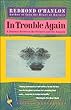
In Trouble Again review by Denis Minev

In Trouble Again: A Journey Between Orinoco and the Amazon
by Redmond O'Hanlon
Edition: Paperback
Availability: In Stock

 
4 of 4 people found the following review helpful:
3.0 out of 5 stars WELL WRITTEN AND FUNNY, OVER THE TOP AT TIMESSeptember 7, 2006
Redmond O'Hanlon is a good travel writer, bringing the reader into his canoe as he faces a torrent of dangers and unpleasant situations. His British humour is very well placed in presenting some of the absurb situations he gets himself into. Especially with Simon as his sidekick (which gives the reader a somewhat normal view of things), the story is quite captivating. 

However, some of his descriptions and stories did leave me with the feeling that he may have augmented the danger of situations to make the story more interesting. He also blew up the stupidity of some characters, giving in to what sounds like basic stereotypes of indians and the fears white people have of indians. 

Overall, this is a decent book. If you are into Amazon travel, this is a nice adition. However, if you just want an intro to the Amazon through the eyes of an adventurer, there are better books, such as David Campbell's (1st person, more scientific pop writing with lyrical qualities) or Candice Millard's (old travel, relating Roosevelt's exploration in the Amazon).

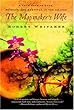
The Mapmaker's Wife review by Denis Minev

The Mapmaker's Wife: A True Tale of Love, Murder, and Survival in the Amazon
by Robert Whitaker
Edition: Paperback
Availability: In Stock

 
10 of 10 people found the following review helpful:
5.0 out of 5 stars TALE OF HISTORY, ADVENTURE, LOVE AND SCIENCESeptember 26, 2006
This book is actually a collection of different topics weaved together with the background of the love story between a lowly French scientist and an upperclass Ecuadorian lady. 

The book starts with a historical science controversy, between Cassini and Newton, regarding the actual shape of the earth. Cassini thought the world was elongated and Newton argued it was fat at the Equator. In order to reach a conclusion, a team is put together to make physical experiments at the Equator to define the shape of the Earth. That is when La Condamine and Louis Godin come in, two top French scientists, who embark on this years long trip. What should have lasted two years takes more than ten. A large group is put together to support the scientist in their journey. 

The author also describes in great detail the society into which they are initially welcomed in Ecuador. However difficulties with clergy and governors arise, culminating in the public lynching of the doctor of the expedition. 

All this occurs before we get to the story of Jean Godin and Isabel Grameson. Jean is the nephew of the scientist Louis Godin and Isabel is the daghter of a rich landowner in Ecuador. They begin their life together in Ecuador during the expedition and then decide to stay on for a while, but when Jean's business enterprises go bankrupt he decides to go back to France with his wife and now large family of four children. He heads through the Amazon, a dangerous journey, in the hopes of figuring out the way and then coming back to get his wife. For a number of reasons, once he is done and safely at the mouth of the Amazon, he does not go back. So, after her four children die of various diseases, Izabel gets tired of waiting and heads on her own journey across the Amazon. And that is when the story happens, which I will not ruin by telling here. 

This book mixed history, science, adventure and love quite well. I highly recommend it to anyone interested in South American history, history of science, love and adventure stories. It is a timeless classic, a story that enthralled people in the 18th century and continues to do so today.

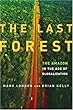
The Last Forest Review by Denis Minev

The Last Forest: The Amazon in the Age of Globalization
by Mark London
Edition: Hardcover
Availability: In Stock


3 of 4 people found the following review helpful:
5.0 out of 5 stars GREAT ANALYSIS OF CURRENT SITUATION IN THE AMAZONApril 5, 2007
Mark London and Brian Kelly come back to the Amazon after having written about it back in the 1980s. They find a very different world, where they find development alongside with poverty and environmental degradation. The book is centered upon understanding the different regions (states) within the Amazon and the differing dynamics within them. The book will not give definitive answers to the region's problems, but rather paint the picture and suggest directions in which we should move. 

A main and important conclusion is the realization that the Amazon is not a pristine jungle without people, but rather that people are an integral part of it, and that any solution needs to take into account the widespread presence of population -- the concept of sustainable development needs to include good living standards for people within the forest. The book also points to some successes in preservation, such as the establishment of the Manaus Free Trade Zone as a means of attracting people away from the interior and providing good living standards. 

The book flows from a history of the Amazon as a portuguese colony, to a Brazilian outpost to the center of the rubber world, to present day. A few key players are highlighted, such as Blairo Maggi (governor of Mato Grosso and the largest soy farmer in the world) and Eduardo Braga (governor of Amazonas and responsible for the reduction of deforestation by 53% in the largest Amazon state). It is also a travel book, highlighting the many different places and realities seen by the authors, from the wealthy shopping malls of Manaus to the poor slums of Altamira. 

Highly recommend this book for anyone wanting to get a good image of the current status of development in the Amazon and hoping to understand the direction in which the region is moving.

The Thief at the End of the World review by Denis Minev

The Thief at the End of the World: Rubber, Power, and the Seeds of Empire
by Joe Jackson
Edition: Hardcover
Availability: In Stock


5.0 out of 5 stars An epic about rubber and its historyAugust 4, 2008
Rubber would not at first seem like such an exciting product. However, the history of it, from La Condamine's first samples brought from the Amazon to France to the momentous steal of seeds by Wickham (main character of the book) to Kew Gardens and later to Malaysia, is a truly outstanding saga of what would today be known as biopiracy but was at the time simply the obligation to serve the British crown. 

The economic collapse left behind by rubber in the Amazon is coupled with the progress brought upon the British colonies in southeast Asia. The book contemplates the history of why rubber (along with coal and steel) became such a valuable material desired and needed for much of the industrial and railroad revolution. The bottleneck was supply of rubber, which came from the tree in not too reachable circumstances in the Amazon. Wickham and the British crown sought to make it more productive and widely available (hence cheaper). 

In the midst of it all is the curious Wickham character - part idealist, part opportunist, who would eventually sacrifice everything (family, love, etc.) chasing dreams across the world from the Amazon to New Guinea. 

I highly recommend this book for anyone who is widely knowledgeable about the Amazon and would like more info on this singular event that changed its history.

The Catfish Connection review by Denis Minev

The Catfish Connection (Biology and Resource Management Series)
by Ronaldo Barthem
Edition: Hardcover
Price: $64.50
Availability: In Stock
17 used & new from $37.12

 
5.0 out of 5 stars HIGHLY ACADEMIC, INTERESTINGAugust 4, 2008
This is an academic book about the accumulated scientific knowledge on the large Amazon catfishes. The book ranges from highly technical notes of how populations are surveyed to a list of all the different species in the region and their characteristics. 

The very interesting fact is the migratory patterns of the different species along different rivers. The general pattern is to reproduce in headwaters, then they travel to the estuary region where they grow and then migrate back to headwaters to feed, grow more (ever larger, 200 pounds or more) and finally reproduce. The study reflects part of the concern over large hydroelectric dams that could interrupt this cycle. 

I recommend this book for anyone interested in the finer aspects of Amazon conservation. Though academic, it is readable for the novice as well.

Insight Guide Amazon Wildlife review

Insight Guide Amazon Wildlife (Insight Guides Amazon Wildlife)
by Hans-Ulrich Bernard
Edition: Paperback
Price: $15.61
Availability: In Stock
25 used & new from $11.65

 
4.0 out of 5 stars COMPILATION RATHER THAN GUIDEAugust 4, 2008
This book is very interesting in the choice of animals it makes and has interesting facts about the Amazon and its species. However, its proposition to be a full guide is too ambitious and cannot be achieved in so short a space. 

Some of the most significant deficiencies relate to the flora, which is only sparsely described. It is not too helpful in identifying species, especially given the abundance of the region. 

I recommend this guide to an amateur who is interesting in identifying a few species, especially of fauna, who is not too particular about identifying specific ones. It is full of interesting facts that a first time visitor would certainly enjoy.

03 October 2008

Lope de Aguirre - The Mad Conquistador of the Amazon

Lope de Aguirre was a Spanish Basque conquistador in South America. He was born around 1510 in Araotz Valley, in the Basque region of Guipúzcoa, part of the Kingdom of Castile in present day Spain.

Wonderful news of the treasures of Peru were reaching Seville during the early 1530s.  Hernando Pizarro arrived with a fifth of the royal treasure of the uncrowned Inca chief Atahualpa: bars of gold and silver, diadems, sheets of precious metal, sacred vases, idols and plates. News spread across Spain and adventurers, Aguirre among them, flocked to Seville, where expeditions were put together.

Aguirre joined a team of 250 men selected by Rodrigo Buran, and they arrived in Peru in 1536 or 1537. He worked alongside Peru’s first viceroy, Blasco Núñez Vela, who arrived from Spain in 1544 with orders to put into practice the New Laws, stifle the Encomiendas (a system where conquistadors were granted trusteeship over the indigenous peoples they conquered), and release the natives.

The conquistadors did not like these laws, particularly because they barred them from taking advantage of the Indians. In 1551 the judge Francisco de Esquivel arrested Aguirre and charged him with violation of the laws for the protection of the Indians. The judge discounted Aguirre’s reasons and his claims of gentry and sentenced him to a public whipping.

Aguirre was so enraged with the punishment he publicly vowed to take revenge upon the judge.  The judge fled after his mandate ended, changing his residence constantly. Aguirre pursued him on foot to Lima, Quito, and then on to Cuzco. In three years he ran 6,000 km by foot, unshod, on the trail of Esquivel. Aguirre found him in Cuzco at last, in the house of the magistrate; while Esquivel was having a siesta in the library, wearing a coat of mail he always wore for fear of Aguirre. Aguirre cut his temples.

He took part in the civil wars among the Spanish conquistadors in Peru after Francisco Pizarro occupied that country in 1533. In 1559 he joined an expedition to search for the renowned El Dorado. The expedition was led by Pedro de Ursúa, a gentleman, who was charged with confirming Orellana´s discoveries and searching for the El Dorado and other riches such as cinnamon.  They initiated their mission down the Marañón and the Amazon river.  Aguirre put together a group of conspirators and ousted and murdered Ursúa along with his wife.  They initially placed Fernando de Guzmán as leader, but soon thereafter Guzman was also murdered by Aguirre. 

Their initial mission was to reach the Atlantic through the Amazon delta, yet Aguirre changed the mission to return as a rebellious group into Peru and take over its riches.  It is unknown whether Aguirre was able to take a shortcut back through the Casiquiare canal into the Orinoco river and present day Venezuela or if he actually completed the mission through the Amazon, following currents that led him back to the Caribbean.  Along the way, Aguirre and his men terrorized and destroyed native villages.

During the journey Aguirre relinquished allegiance to the king and sought to return to Peru to set up an empire there that would be independent of Spain.

Aguirre, the Wrath of God is an independent 1972 German film written and directed by Werner Herzog about Aguirre. The story follows Aguirre’s travels as he leads a group of conquistadors down the Amazon River in search of the legendary city of gold, El Dorado. This was the first of five film alliances between Herzog and the explosive lead actor Klaus Kinski. Aguirre opened to widespread critical acclaim, and rapidly developed a huge global cult following.

Noted film critic Roger Ebert describes the film as “one of the great haunting visions of the cinema.” The haunting, ecclesiastical music sets its tone. Herzog doesn’t rush the conquistadors’ voyage, or fill it with artificial episodes of suspense and action. Ebert compares the film to 2001: A Space Odyssey, and Apocalypse Now, and describes Herzog as “the most visionary [of modern filmmakers] and the most obsessed with great themes.”

Lead Klaus Kinski was “made to play villains,” says Time Magazine. In this film, he depicts Aguirre’s madness as he tries to tame the wilds of Peru with almost frightening believability. Aguirre’s crew, under assault from the natives, had gone mad too. “That is no arrow,” one crewmember says in the film. “We only imagine the arrows because we fear them.”

The film follows the same journey that Aguirre takes, quiet at first, and pleasantly mysterious. The jungle grows increasingly hostile as the film progresses. We learn from a local Indian that this wilderness goes on forever. He cautions Aguirre, “God, in his anger, never finished this place.” This comes long after the opening narration informs us that El Dorado is and always has been a ruse invented by the Indians to drive Europeans, who the Indians now know are clearly not gods, deeper and deeper into the wilderness.

In 1561, at the end of his failed mission along the Amazon, Aguirre wrote a letter to King Philip II, which rejected the discovery and invention of America as the object of European mythical aspirations. This small piece of protest is considered the most radical of the reports, dispatches and chronicles sent to Spain from the colonies. Aguirre openly blames the king for deserting him and not respecting the old promises of mutual service.

The letter begins, “From Lope de Aguirre, your lesser vassal, old Christian, of middling parents but fortunately of noble blood, native of the Basque country of the kingdom of Spain, citizen of the town of Onate,” and continues, “I demand of you, King, that you do justice and right by the good vassals you have in this land, even though I and my companions (whose names I will give later), unable to suffer further the cruelties of your judges, viceroy, and governors, have resolved to obey you no longer.

“I am certain there are few kings in hell because there are few kings, but if there were many none would go to heaven. Even in hell you would be worse than Lucifer, because you all thirst after human blood. But I don't marvel nor make much of you. For certain, I and my 200 harquebus-bearing maranones, conquistadors and noble, swear solemnly to God that we will not leave a minister of yours alive, because I already know how far your clemency reaches.”

Aguirre seized Isla Margarita in 1561 and cruelly suppressed any resistance to his reign. His open mutiny against the Spanish crown came to an end when he crossed to the mainland in an attempt to take Panama. He killed his own daughter Elvira when he was surrounded at Barquisimeto, Venezuela, “because someone that I loved so much should not come to be bedded by uncouth people.”

Aguirre was eventually captured and shot, and his body was cut in quarters and sent to various cities across Venezuela.

02 October 2008

Francisco de Orellana - A brief history of the first explorer of the Amazon

Francisco de Orellana was a Spanish explorer and conquistador. He may have been a relative of Francisco Pizarro, the conquistador of Peru. Like his Pizarro relatives, Orellana was born in Trujillo, Estremadura. He reached the New World as a teenage boy and participated in the Pizarro conquest of Peru, where he lost an eye in battle. He was one of Gonzalo Pizarro’s lieutenants during his 1541 mission across the Andes Mountains east of Quito into the heart of South America in quest of El Dorado and the Country of Cinnamon.

They faced tremendous challenges overcoming the Andes, leaving from Quito, when they finally arrived at the Napo River, one of the Amazon river´s tributaries that lead to the Amazon basin lowlands.  They faced Indian attacks and captured many, who under duress kept confessing to there being a land of gold and nutmeg downriver.  After weeks of hardship and with their food reserves running low (by this time they had eaten their horses and dogs), Orellana was ordered by expedition leader Pizarro to sail downriver in search of food and signs of treasure and then return.

Orellana was chosen because he knew many native languages, and could communicate with the Indians and get help. But he and his men didn’t find any villages while navigating the Napo River. Instead, they suffered so much hunger they ate their own shoes.

He descended the stream to its junction with the Amazon River, in present-day northeast Peru; instead of returning, as he had promised Gonzalo Pizarro, he proceeded down the river to the Atlantic Ocean. Orellana managed to navigate the length of the Amazon in one of the most surprisingly successful expeditions in known history, arriving at the river’s mouth on August 24, 1542.  He then managed to follow sea current up the coast of South America, finally reaching the Caribbean and Isla Margarita in Venezuela, from where he was taken to Spain to meet the king and tell of his amazing journey.  He is known as the first European to descend the Amazon river.

Chaplain of the expedition, Gaspar de Carvajal, wrote a diary of their voyage, which provides interesting, if not always accurate, descriptions of what the Amazon was like before Europeans arrived.  He describes fertile croplands and turtle farms in the heart of the Amazon Basin. Long thought to be exaggerations, attitudes to Orellana’s claims are beginning to change. His description of continuous riverside human settlements are slowly being met by the archeological record, showing that the Amazon is a place that can sustain large human agglomerations, as long as the appropriate technology for sustainability exists. 

He may have well led the first party of Europeans through a greatly advanced civilization that thrived in the Amazon for centuries – a civilization whose existence was thought to be impossible. 

The excavation of ruins and even fragments of the language of Amazonians with words for crops they were supposedly unable to farm suggests that there were complex agricultural practices in place thousands of years ago.

Archaeologists have found that these Amazonian farmers apparently developed raised fields over half-mile long with irrigation canals in between. Somehow they found a method to enrich the soil with a microorganism that creates a dark, loamy stratum with potting-soil like qualities. Up to 10% of the Amazon Basin has been terra-formed in this manner by the ancients – an area the size of France.

A Spanish expedition in 1617 remarked on the extent and high quality of a network of raised causeways connecting villages in the Amazon together. These causeways can still be seen as straight lines cutting across the savannah. Alongside them run canals, the result of their construction. This canal network could have sustained hundreds of thousands of people, and archaeologists believe that this area was home to a society that had totally mastered its environment.

During his voyage, Orellana also described encountering a tribe of women very white and tall and doing as much fighting as 10 men. These warrior women were very skilled with bows and arrows, and their queen, Conori, was said to have great treasures. Their formidable strength brought to mind the Amazons of Greek mythology, and Orellana’s tales of these female warriors gave the river and the region its name.

Orellana’s own name remains a bit stained owing to the suspicion that he abandoned Pizarro in a desperate situation. However, his men testified and he was found innocent. When he returned to Spain, Orellana sought and obtained a dispensation to explore and rule New Andalusia, meaning roughly the land south of the great river. He sailed from Sanlúcar on May 11, 1545, with an inadequately outfitted fleet and accompanied by his wife, Ana de Ayala, whom he had married in Spain. 

After being appointed governor of New Andalusia, he and his men arrived at the Amazon river delta, built a riverboat and explored 500 km of the region. They faced many hardships and of the 300 men he had taken with him from Spain only 44 were rescued at sea by another Spanish fleet.  Orellana was one of the casualties – he died in November 1546.

The Amazon is the world’s second-longest river at 3980 miles. Its collects water from 40 percent of the continent, in the form of thousands of tributaries, many of which are more than 1000 miles long. As with the Nile, the people who lived in the Amazon in ancient times used the river for agriculture and transportation.

There is now an inland province of Ecuador named Orellana, the capital of which is Puerto Francisco de Orellana. The province is named after Orellana, who is said to have sailed from somewhere near the town to the Atlantic Ocean. He did this trip several times looking for El Dorado and a rumored nutmeg forest, nutmeg at the time being a very expensive spice.

Orellana, fanatical as he was with finding gold, was known as the “Gilded Man.” He claimed to have seen the glittering El Dorado, stories of which still reverberate through the archaeological community, and while it is perhaps easier to believe that Orellana was a fraud, there are still those who look for remains of the past that might confirm that the legendary city did exist.

The legend of El Dorado apparently originated in a tradition of the Chibcha people of Colombia who each year selected a chieftain and rolled him in gold, which he then ceremonially washed off in a sacred lake, casting offerings of emeralds and gold into the waters at the same time. This custom had evidently vanished long before the coming of the conquistadors, but the tales lived on and grew into a legend of a land of gold and plenty.

Orellana’s exploration also produced an international issue between Spain and Portugal because, according to the Treaty of Tordesilhas, the delta of the Amazon should be ruled by Portugal. It would only be resolved a century later with the exploration of Pedro de Teixeira.

Amélioration de l'administration publique ISO 9000

Cette semaine a marqué la première certification ISO 9000 obtenue par l'administration de l'Etat actuel ; Cette certification est la première d’une liste que nous espérons très longue.

L'IPEM (Institut des Poids et Mesures de l'Amazonas) a été recommandé pour la certification sans exception, après un an de travail laborieux, certainement reconnaissable par ceux qui ont déjà travaillé sur la mise en place d’un système de qualité.

L'ISO fournit un cadre de trois applications pratiques qui, même si elles ne garantissent pas la bonne gestion, donnent au moins la certitude qu'un effort a été fait pour démontrer un engagement continu pour l'amélioration. Ce qui peut, en soi, par la suite être qualifiée de bonne gestion.

Les trois applications pratiques sont :

·         Gestion du talent : La certification ISO exige qu'un décideur prête une attention particulière aux qualifications et à la formation de ses administrés. Des heures de formation et une obtention de diplôme appropriée sont des conditions de base requises pour l'accomplissement de la certification ISO.

·         Indicateurs : Comme l’a déjà dit Peter Drucker, le père de la gestion moderne :” Ce qui peut être mesuré peut être géré”. L’ISO exige l'établissement d’indicateurs aux principaux niveaux de l'organisation.

Par exemple, une organisation devrait mesurer :

La productivité d'un secteur (nombre de processus conclus), la moyenne du retard des processus (tout en recherchant toujours des possibilités plus rapides), et la qualité (dans combien de cas la répétition est-elle nécessaire).

Un indicateur d'importance capitale, pas encore toujours considéré en tant que tels dans le domaine du service public, est la satisfaction du public par les services fournis.

Par exemple, IPEM prend le soin précis des articles importants à l'économie, telle que les taximètres, les balances, les pompes d’essence, et autres.

Dans ce processus, il fait un contact fréquent avec les consommateurs aussi bien qu'avec les entrepreneurs.

Maintenant, L'IPEM mesure la satisfaction de ces utilisateurs et est audité pour vérifier le traitement précis d’éventuelles réclamations.

·         Amélioration continue:

L'ISO exige l’établissement d’un organigramme des processus et la vérification d’éventuelles oblitérations et difficultés dans l'exécution du cahier des charges.

Après cette vérification, il y aura naturellement toujours des problèmes existants.

L'ISO dispose d'un outil, le traité de non-conformité, qui assure que chaque fois qu’un problème significatif est découvert, il y aura une recherche de solution durable.

L'auditeur externe, en exécutant l'audit, recherche des évidences que l'organisation vise toujours ces améliorations.

Une fois mise en application avec rigueur, ces simples pratiques sont d'une efficacité incontestable dans l'administration privée ou publique.

L'ISO systématise l'adoption de ces pratiques et garantit leur continuité.

Aujourd'hui, nous opérons avec plus de dix agences d'Etat ayant implémentées ces pratiques, avec bientôt la certification probable de SEPLAN (Secrétariat de la planification), de CIOPS (Centre Intégré des Opérations de Police) et de CGL (Commission des Achat Généraux). D’autres seront lancées sous peu.

Je voudrais, en conclusion, faire une suggestion à ceux qui ont adhérés aux principes des pratiques mentionnées ci-dessus.

Que ceux qui connaissent des décideurs publics, quelque soit leur sphère, les interrogent sur ce qu'ils font par rapport à chacun des points mentionnés dans cet article. Une recherche est-elle faite sur la satisfaction de vos clients, le public ?  Quelles sont les politiques impliquées dans l'évaluation des administrés, la formation, et le recrutement ? Quel système adoptez-vous dans votre recherche d'amélioration continue ?

C'est seulement avec une société exigeante que nous pouvons avoir un certain espoir d'un meilleur futur.